
At the second Africa Climate Summit, the Pathfinder Initiative and partners hosted a high-level event on integrating health into Africa’s climate change mitigation, adaptation and resilience strategies.
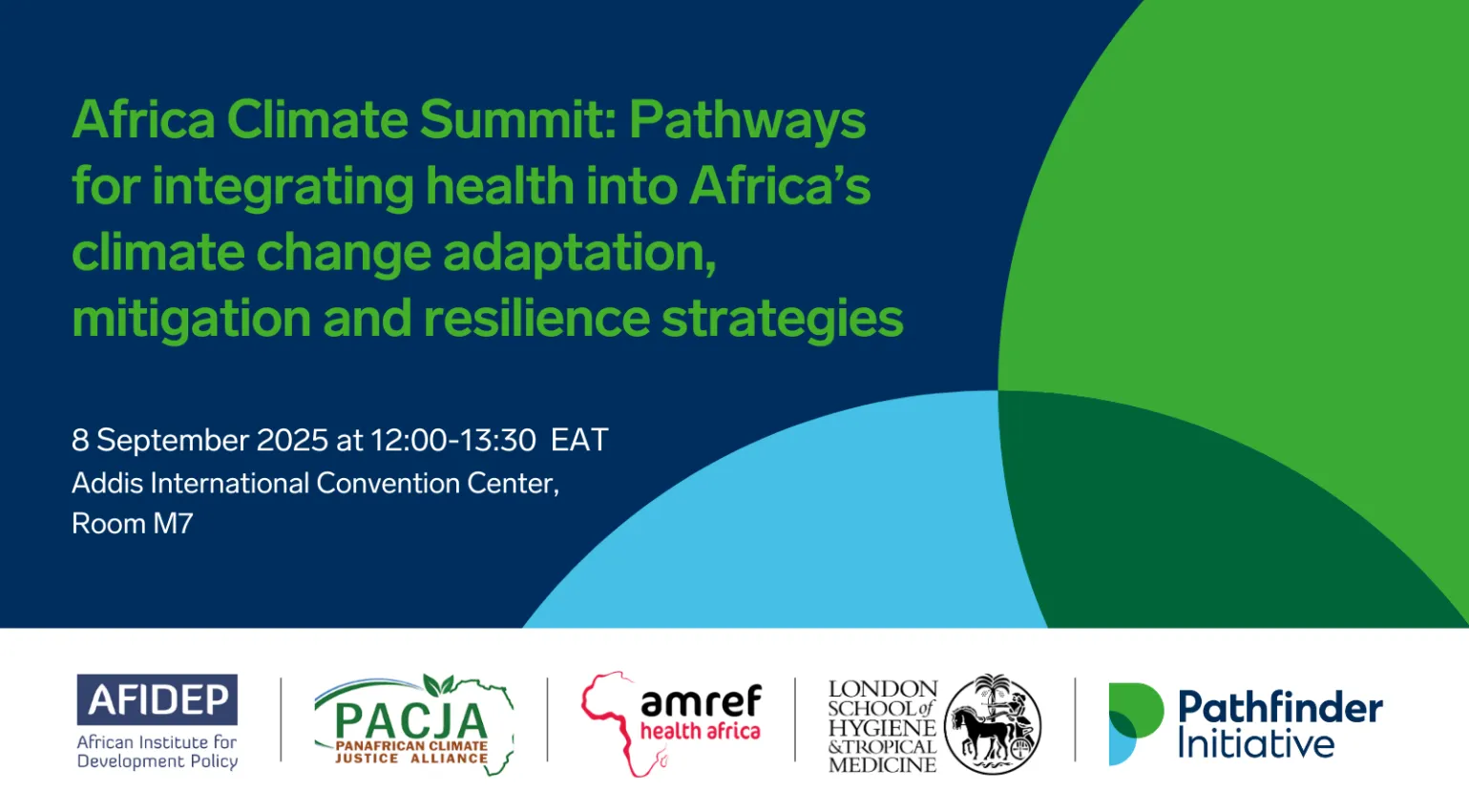
The second Africa Climate Summit, hosted by the Government of Ethiopia in collaboration with the African Union, took place in Addis Ababa, Ethiopia, from 8-10 September. Focusing on the theme ‘Accelerating Global Climate Solutions: Financing for Africa’s Resilient and Green Development’, the Summit provided an important opportunity to advance Africa’s climate agenda and sustainable development priorities.
The African Institute for Development Policy (AFIDEP), Pan African Climate Justice Alliance (PACJA), Amref Health Africa, and the London School of Hygiene & Tropical Medicine (LSHTM), co-hosted a high-level policy dialogue on ‘Pathways for integrating health into Africa’s climate change adaptation, mitigation and resilience strategies’ at the Summit to explore ways to embed health into regional and national climate policies in Africa.
Despite growing awareness of the links between climate change and health, barriers remain to integrating health into climate policies and programmes, including limited funding and a lack of coordinated approaches to tackling climate and health challenges.
The dialogue brought together policymakers, researchers, civil society, and development partners to highlight the health dimensions of climate change, showcase evidence on the health co-benefits of climate action, and identify opportunities to integrate health into national climate frameworks. The event highlighted that bold, integrated approaches are needed to build resilience and secure a healthy, low-carbon future for Africa.
Speakers included: Nicholas Okapu Etyang, Policy Engagement Manager, APHRC, Dr Robert Hughes, Assistant Professor, LSHTM and Pathfinder Initiative; Dr Nurudeen Alhassan, Senior Research and Policy Analyst, AFIDEP and Pathfinder Initiative; Ruth Ngechu, Advocacy and External Engagements Director, Pathfinder International; and Evans Njewa, Chief Environmental Officer at the Ministry of Natural Resources and Climate Change and UNFCCC Focal point, Government of Malawi.
Presenting on evidence from the Pathfinder Initiative on the health benefits of climate mitigation, Dr Rob Hughes said: “Well-designed climate mitigation could prevent millions of premature deaths each year. But to capitalise on this, Africa must generate its own real-world research, rather than relying from models and evidence from the global north.”
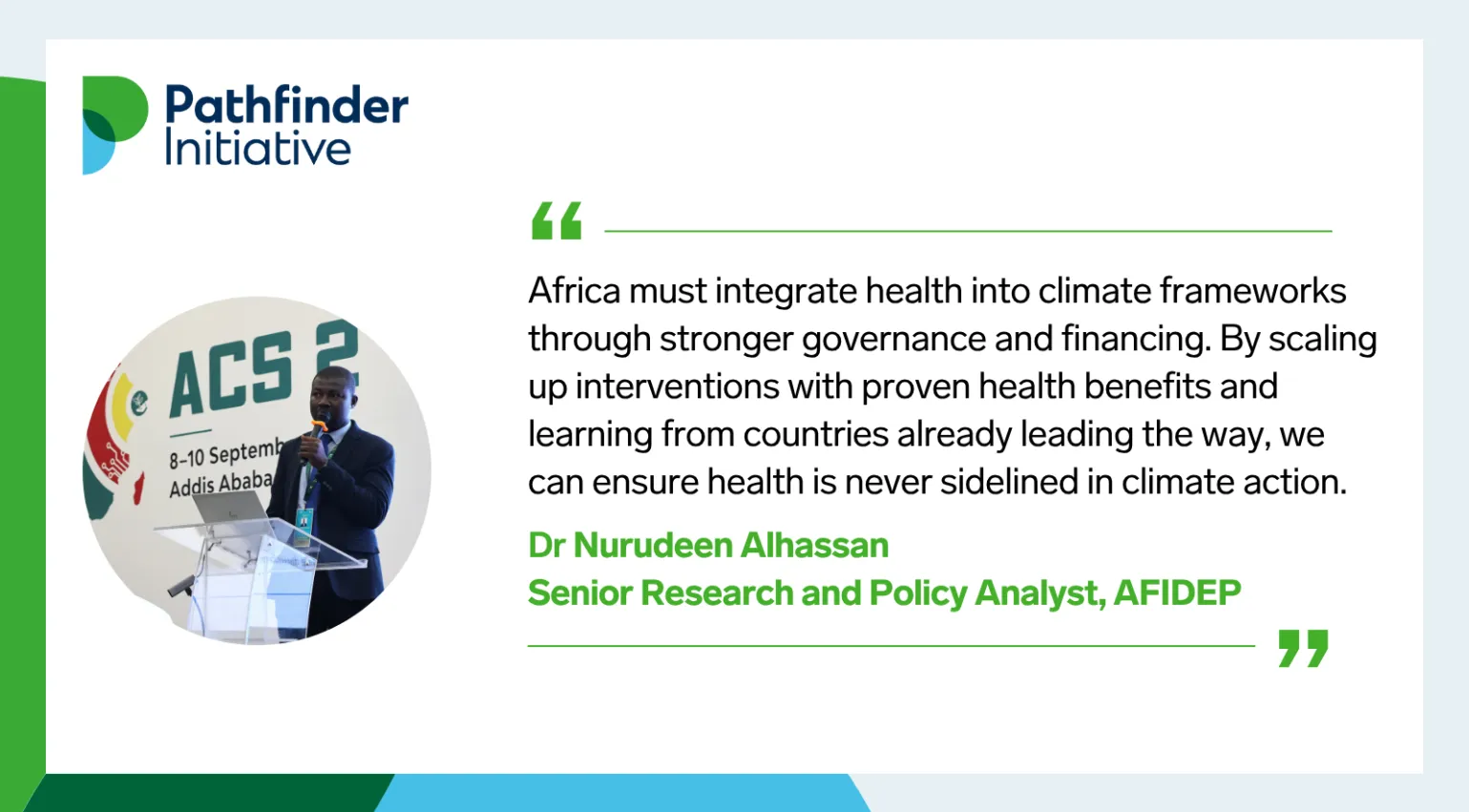
Dr Nurudeen Alhassan said: “Africa must integrate health into climate frameworks through stronger governance and financing. By scaling up interventions with proven health benefits and learning from countries already leading the way, we can ensure health is never sidelined in climate action.”
For more information on the Africa Climate Summit, visit the Summit website.
Workshop on developing a Community of Practice on climate action and health in Africa
On the sidelines of the summit, AFIDEP and LSHTM also hosted a workshop to discuss the establishment of a new Community of Practice on climate action and health in Africa. Participants of the workshop were invited to join and help shape the development of the Community of Practice.
The Community of Practice on Climate Action and Health in Africa will bring together researchers, policymakers, civil society and other key actors working at the intersection of climate and health in Africa, and will aim to:
• Share knowledge, lessons, and best practices on integrated climate–health solutions;
• Foster interdisciplinary collaboration and cross-sectoral partnerships; and
• Support uptake of evidence-based policies and programmes that deliver both climate and health gains.
As part of this initiative, AFIDEP has established a LinkedIn group for Community of Practice members to share insights and resources.
Join the Community of Practice
At the workshop the AFIDEP research team also presented a report on a recent workshop, held as part of the Pathfinder Initiative work programme, on ‘Framing of health co-benefits of climate change mitigation in Africa’. The report highlights the need for greater emphasis on win-win solutions for climate and health in Africa, and outlines practical pathways to a healthy, low-carbon future in the African context including opportunities for climate mitigation actions across sectors such as energy, transport, land use and waste.