
Experts from the Pathfinder Initiative spoke at the World Health Summit, presenting evidence on win-win actions for climate and health and the importance of community engagement.
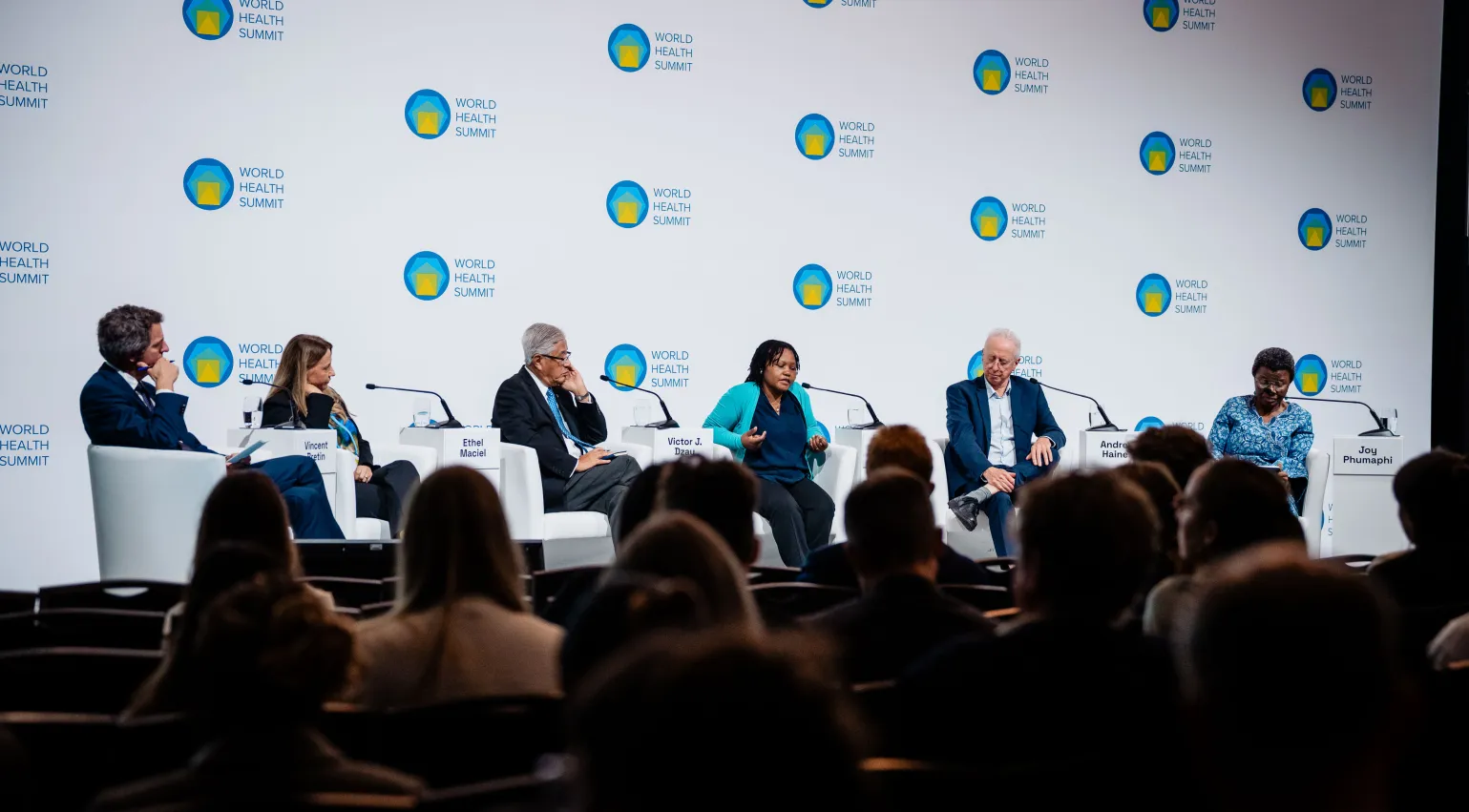
The 2025 World Health Summit took place from 12 to 14 October in Berlin, focusing on the theme ‘taking responsibility for health in a fragmenting world’. The summit brought together key actors in global health from all sectors and regions to discuss solutions to tackle urgent public health challenges.
The Pathfinder Initiative, in collaboration with the African Population Health Research Center (APHRC), National Academy of Medicine, and WHS Alliance, hosted a session at the summit with the title ‘Climate in crisis, health at risk: equitable strategies for a net-zero world’. The session aimed to explore ways to improve health and save lives through ambitious policies and actions to cut greenhouse gas emissions and address climate impacts. Experts from research, policy and practice took to the podium, presenting diverse perspectives but with the common thread of emphasising the urgency of and opportunities for climate and health action.
Session moderator Joy Phumaphi, Co-Chair of the Lancet Pathfinder Commission and Executive Secretary of the African Leaders Malaria Alliance, opened the event with a powerful reminder of the growing impacts of climate change on health and highlighted the need to harness opportunities for transformative change. Carsten Schneider, Federal Minister at the Federal Ministry for the Environment, Climate Action, Nature Conservation and Nuclear Safety of the government of Germany, delivered the keynote speech, outlining the government’s cross-sectoral approach to climate action, including its goal of becoming carbon neutral by 2045. Minister Schneider emphasised that different policy areas including environment and climate, food and health, must be interlinked.
Professor Andy Haines, Professor of Environmental Change and Public Health at the London School of Hygiene & Tropical Medicine and Co-Chair of the Pathfinder Initiative, presented evidence on the health co-benefits of climate action, noting that over 5 million deaths each year are caused by air pollution from fossil fuel burning, around 5 million deaths per year are caused by physical inactivity, and around 15 million deaths a year could be prevented by shifting to healthier, more sustainable diets. Professor Haines also highlighted the need to integrate mitigation and adaptation actions across all sectors to maximise benefits.
Dr Elizabeth Kimani-Murage, Lead of Nutrition and Food Systems at APHRC and part of the Pathfinder Initiative team, spoke about equitable community and multi-sectoral engagement for climate-health co-benefits, with a particular focus on Kenya. Dr Kimani-Murage presented work led by APHRC as part of the Pathfinder Initiative on health in Kenya’s climate change strategies, providing recommendations on ways forward to mainstream health in climate policies and engage with local communities.
Dr Victor Dzau, President of the National Academy of Medicine (NAM), shared insights on transforming systems for climate and health and NAM’s approach to driving health-centred climate action through its Grand Challenge on Climate Change, Human Health, and Equity. Dr Dzau reiterated the need to address emissions from all high emitting sectors including energy, agriculture, industry, and transportation to advance climate and health goals. He spoke of health as a unifying force and catalyst for change across diverse economic, political, and sectoral agendas.
The session also featured a speech from Dr Ethel Maciel, Special Envoy for COP30 and Secretary for Health and Environment Surveillance of the Brazilian Ministry of Health, on the health agenda at COP30 in Belém. Dr Maciel emphasised the notions of climate justice and equity and three key areas – surveillance, capacity building, and innovation – that are central to the Belém Health Action Plan.
Dr Vincent Bretin, Director of Climate and Health at Unitaid, delivered the final presentation, focusing on climate-smart health products and showcased examples of innovations such as vector control tools and heat-stable products that are helping to drive the climate transition in the health sector.
The panel discussion covered wide-ranging topics including facilitating transdisciplinary collaboration, trade-offs of implementing climate interventions, the significance of the International Court of Justice’s landmark advisory opinion on the obligations of states to tackle climate change, and achieving transformative change for a liveable future.
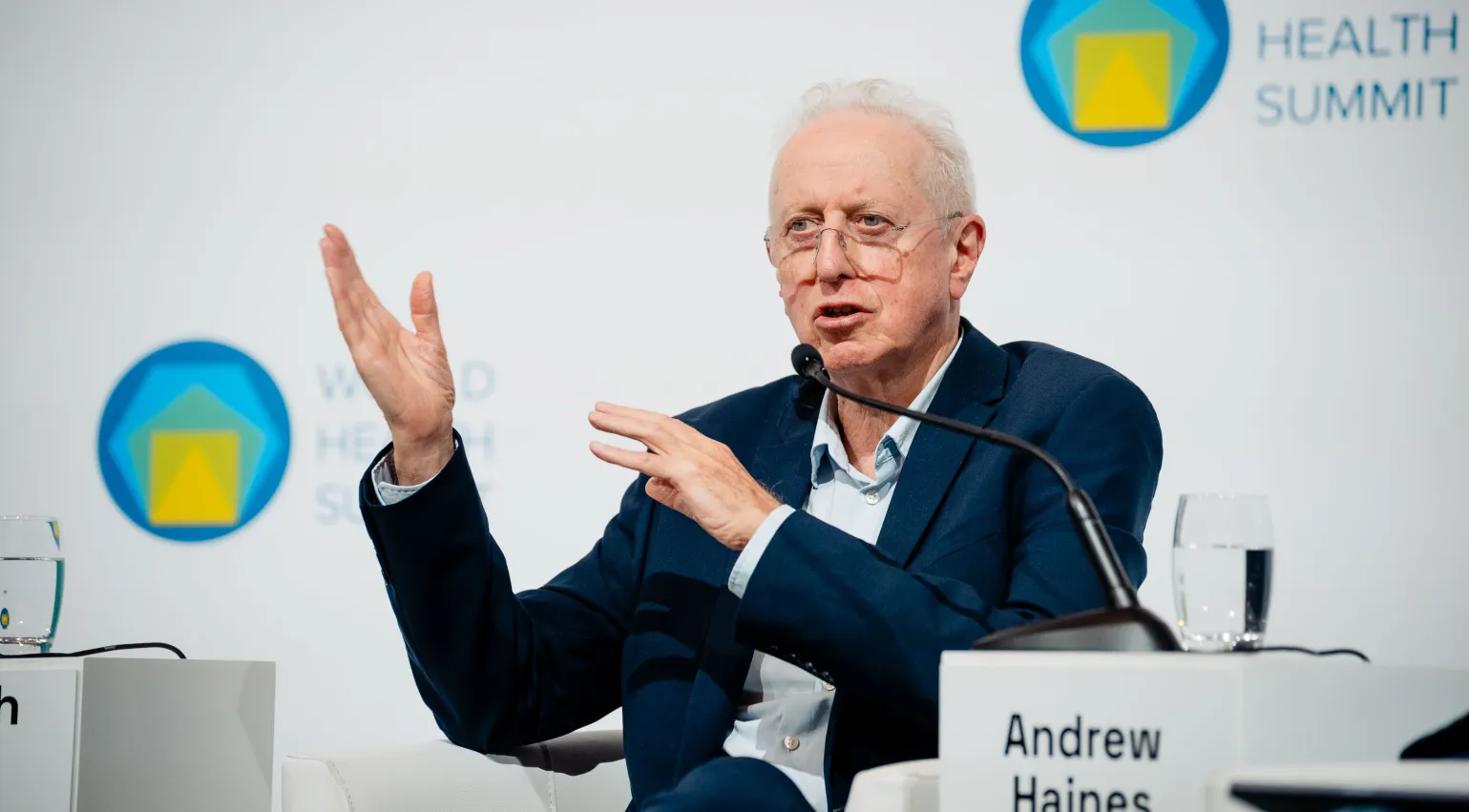
Commenting on the need for both incremental and transformative changes, Professor Haines said: “We need both incremental and transformative changes because you can’t propose a dramatic transformation of the way people live without also addressing everyday problems. Transformative changes can never take place without the consent of the communities and societies which are going to transform.” He noted the importance of effectively communicating the benefits of policies and interventions to avoid pushback.
Concluding the session, Joy Phumaphi said: “Health is at risk, but there is a lot we can do. Let’s continue to push the agenda. The tools are available, let us use them.”