
Experts gather in Nairobi to share evidence and approaches for climate and health action in Africa at a workshop hosted by Pathfinder Initiative partners.
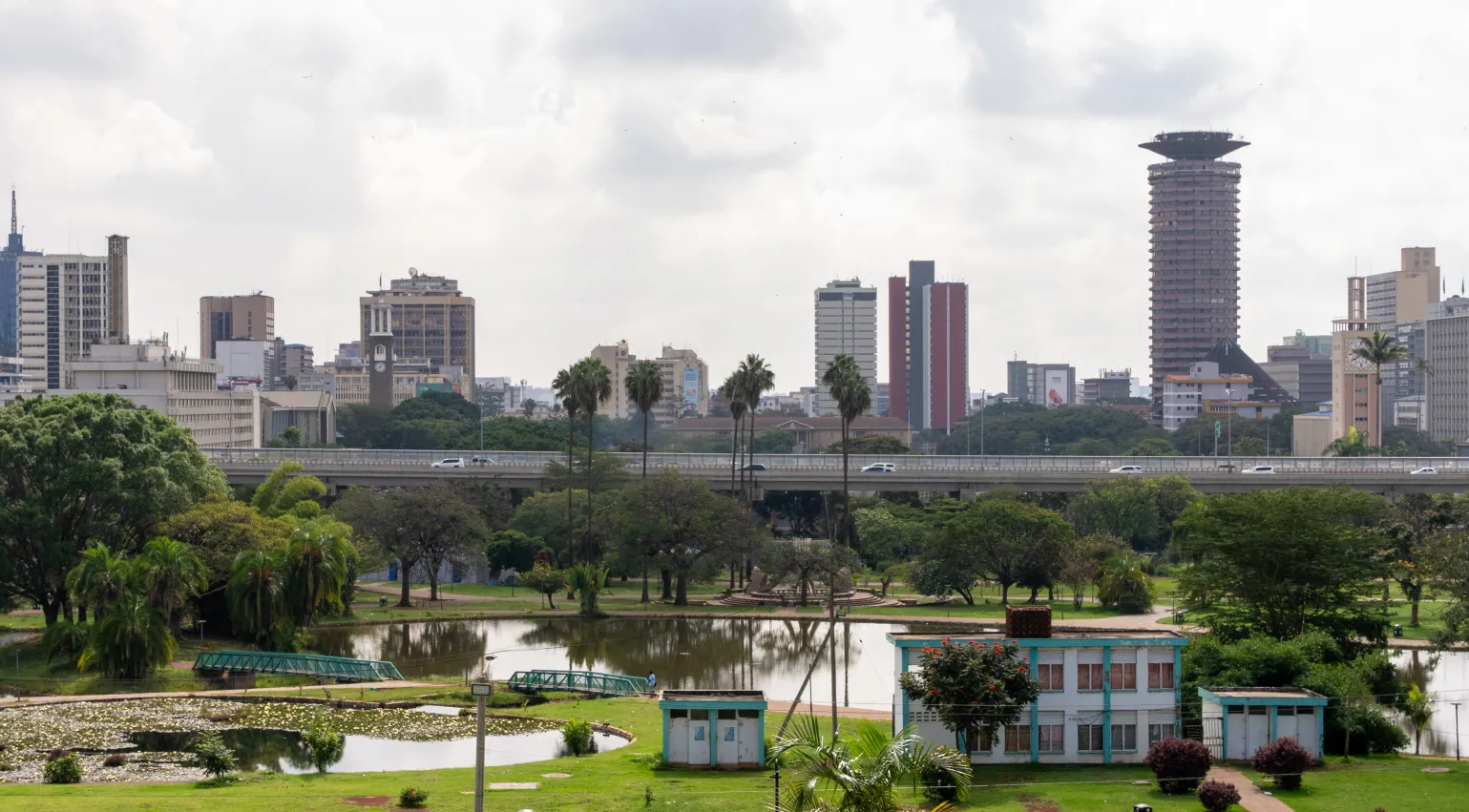
Researchers, policy experts, and climate advocates from more than 10 countries across Sub-Saharan Africa (SSA) gathered in Nairobi for a workshop hosted by the Pathfinder Initiative from 28-30 April 2026. Facilitated by African Institute for Development Policy (AFIDEP), the African Population and Health Research Center (APHRC) and the London School of Hygiene & Tropical Medicine (LSHTM), the three-day programme focused on knowledge sharing, capacity strengthening, and translating evidence to climate and health action across the region.
The workshop opened with participants sharing their wide-ranging expertise and backgrounds, including their current role in the climate and health field, as well as what an alternative career path might have been if they hadn’t worked in this area. Participants shared that they might have been architects, lawyers, clinicians, athletes, and storytellers – aspirations now being channeled into tackling environment and health challenges and advancing the climate and health agenda.
Dr Nurudeen Alhassan, Senior Research and Policy Analyst at AFIDEP, and Dr Rob Hughes, Assistant Professor at LSHTM, kicked off the day with key questions to address throughout the workshop. Participants identified climate and health impacts in Africa, before the conversation moved on to solutions.
Emphasising this focus, Dr Alhassan said: ‘We want to move away from the culture of seeing Africa as a victim, and move towards solutions and actions we can take that would generate benefits for health, climate, and development.’
He added: ‘A lot of the narrative in Africa has been about adaptation as the continent is on the frontline of experiencing climate impacts, while contributing relatively little to global emissions. But many African cities are changing, air pollution for example is a growing health challenge. There are opportunities for us to contribute to the broader discussion on climate action. We need to think about solutions that work in the regional and local context, instead of thinking in terms of adaptation vs mitigation.’
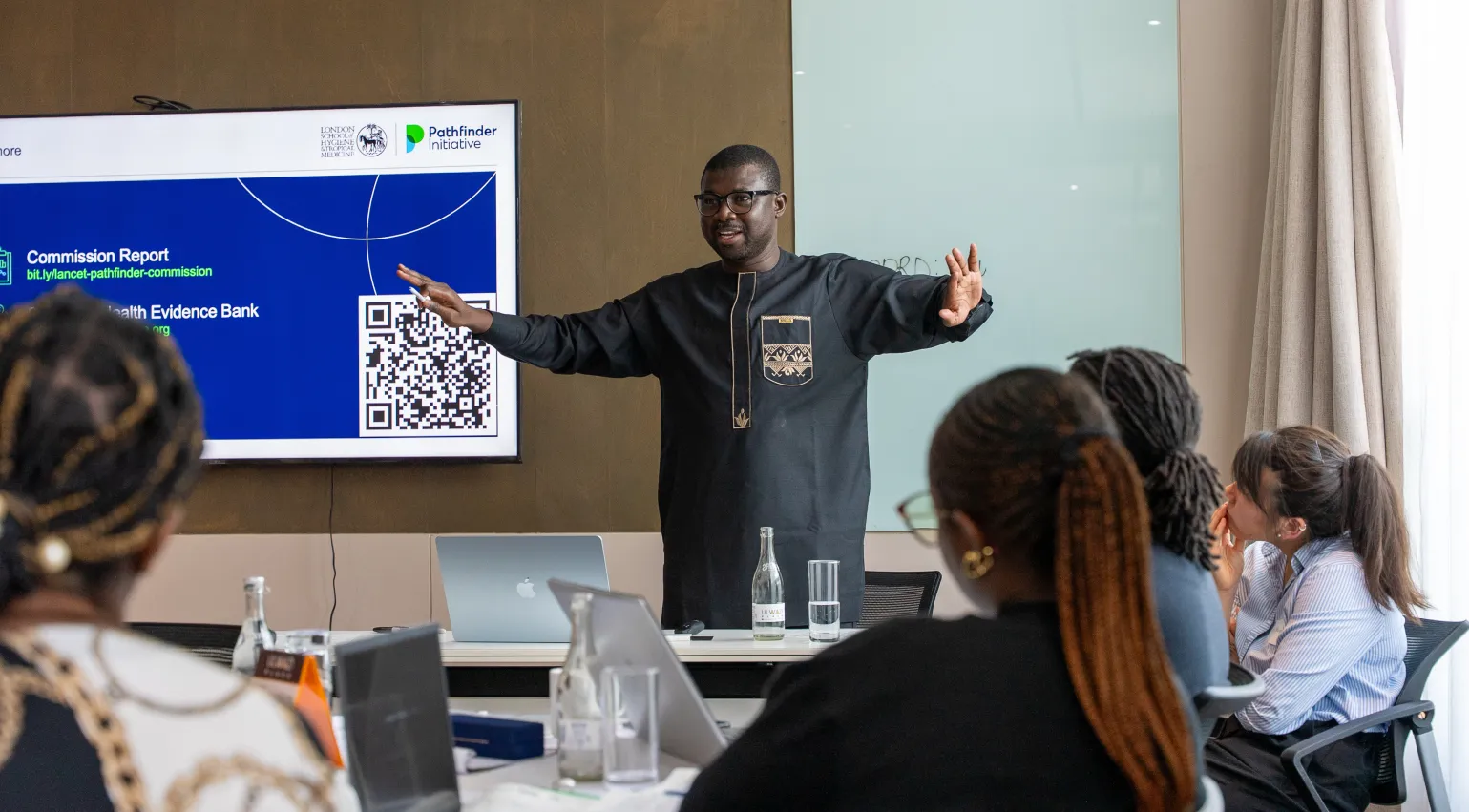
A key focus of the workshop was the topic of framing climate and health action in SSA in a way that is regionally and locally relevant, building on previous work summarised in the Framing of Health Co-Benefits of Climate Change Mitigation in Africa report, produced by experts from AFIDEP and LSHTM. Speakers focused on the need to highlight win-win solutions and opportunities, as well as the need to adapt language and framing to specific audiences from policymakers and different ministries within government to local communities and people advocating for action.
Participants shared their views on framing that works in different contexts in SSA, and discussed potential opportunities to better communicate the health benefits of climate action, as well as the investment case for integrated climate and health policies.
Blanca Anton and Rebecca Newbould, researchers in the Pathfinder Initiative team at LSHTM, presented findings from an organisational capacity assessment that was carried out as part of the Pathfinder Initiative, which aimed to identify key capacity strengthening needs within organisations in SSA to drive evidence-informed action on climate and health. The LSHTM, AFIDEP and APHRC teams surveyed over 50 organisations including research institutions, government agencies, NGOs and businesses to assess their understanding of core climate and health concepts, access to data, influence on policy, sectoral focus, and future areas of work.
Alice Ritho, Research Officer at APHRC, presented research led by APHRC on health co-benefits in Kenya’s climate change policy documents. She said: ‘Despite the fact that many climate mitigation actions can bring benefits to health, health co-benefits are not systematically embedded within Kenya’s climate policy documents, and there is a lack of robust monitoring and evaluation frameworks. While the country’s climate policies are strong in many aspects, these omissions could be a missed opportunity.’
The last session of the first day focused on AI in climate and health research, where participants explored the Pathfinder Initiative living evidence map, due to be launched later this year. The living evidence map, an AI-powered tool, brings together global climate and health evidence in real-time. The second day featured further presentations on using AI in climate and health research, an introduction to modelling, and engaging with policymakers. On the topic of policy engagement, Dr Alhassan emphasised the importance of aligning outputs and engagement with policy windows, as well as tailoring messages to policymakers’ incentives. He emphasised that framing arguments in terms of health and economic gains can be a powerful tool for driving policy change.
The final day focused on economic evaluation and funding for climate and health research and action in SSA. Dr Giulia Greco, Associate Professor at LSHTM, gave an introduction to economic evaluation of climate and health actions, drawing on an example from an economic analysis of the impact of mitigation and adaptation strategies for extreme heat on maternal health outcomes in three sub-Saharan African countries. Cecilia Vaca Jones, Executive Director at Breathe Cities, Helen Yaxley, Climate and Health Policy Lead at FCDO, and Dr Modi Mwatsama, Head of Capacity and Field Development at the Wellcome Trust, then shared their perspectives on the funding landscape for climate and health research and action in SSA, including opportunities and challenges relating to the region. They emphasised the need for more evidence with a focus on policy solutions that will help drive change across multiple sectors. One participant shared reflections in the Q&A about how ‘data is like the new oil’ and that researchers and funders should instead be working towards making data flow like water, accessible and available to all.
The final session featured presentations from workshop participants on case studies of climate and health solutions that they had been developing throughout the three days. Case studies included: nature-based solutions such as tree planting in Uganda, Kenya, and Ethiopia; community-led solutions such as a grassroots initiative leveraging Indigenous knowledge systems and digital platforms to address climate and health challenges in Harare, Zimbabwe, and community-led early warning systems that translated weather forecasting into local languages and health advice in the Kibera informal settlement in Nairobi, Kenya. Presentations also focused on technological solutions such as the use of solar panels on health facilities, and geospatial technologies used to monitor institutional carbon offsetting.
Reflecting on three days of discussions, Dr Hughes said: ‘The workshop has been a great platform for knowledge sharing on climate and health in Africa and capacity strengthening in areas like economic evaluation, modelling and AI use, where there are real opportunities. Building these skills will be key to addressing data gaps on climate and health in Africa and providing policymakers with evidence they can use in their national or local context.’
Reagan Emoru Daniel, an early career researcher at the Medical Research Council/Uganda Virus Research Institute and LSHTM Uganda Research Unit, said: “As someone trained in medicine and public health, I’m interested in taking climate and health evidence into clinical settings, as well as influencing policymaking. A key takeaway from the workshop was the need to better communicate climate and health messages to decision makers, and to think about integrated mitigation and adaptation strategies that benefit health. I’m looking forward to using learnings from the workshop in my research going forward.’
The workshop forms part of a broader programme of work led by the Pathfinder Initiative partners to strengthen capacity and share knowledge on climate and health research and action in Africa. Collaboration and knowledge exchange will continue through the Community of Practice on Climate and Health Action in Africa.
Further resources
Framing of Health Co-Benefits of Climate Change Mitigation in Africa
Read more about and join the Community of Practice on Climate and Health Action in Africa